
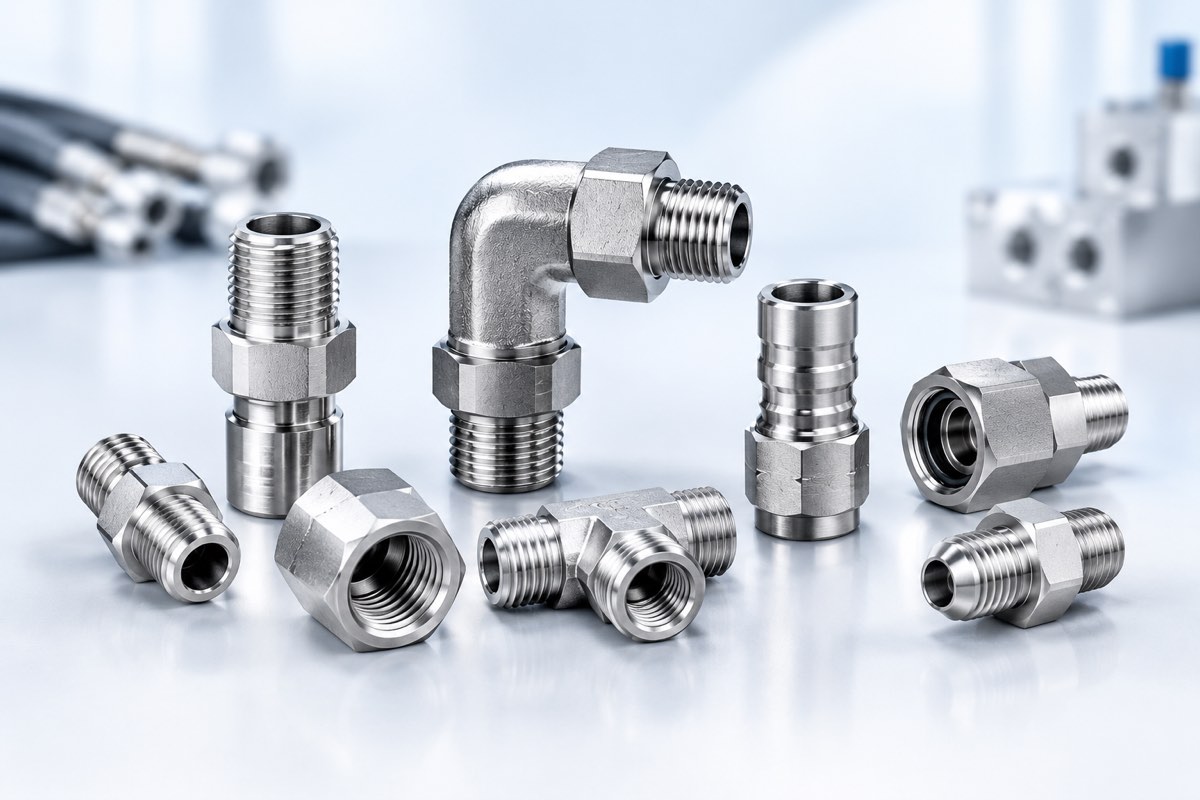
A hydraulic system is only as good as its smallest fitting. At working pressures of hundreds of bar, a port thread slightly out of size or a sealing face with the wrong finish becomes a leak. Here is what goes into machining hydraulic components that seal first time.
Typical hydraulic components
- Adaptors, nipples and banjo fittings
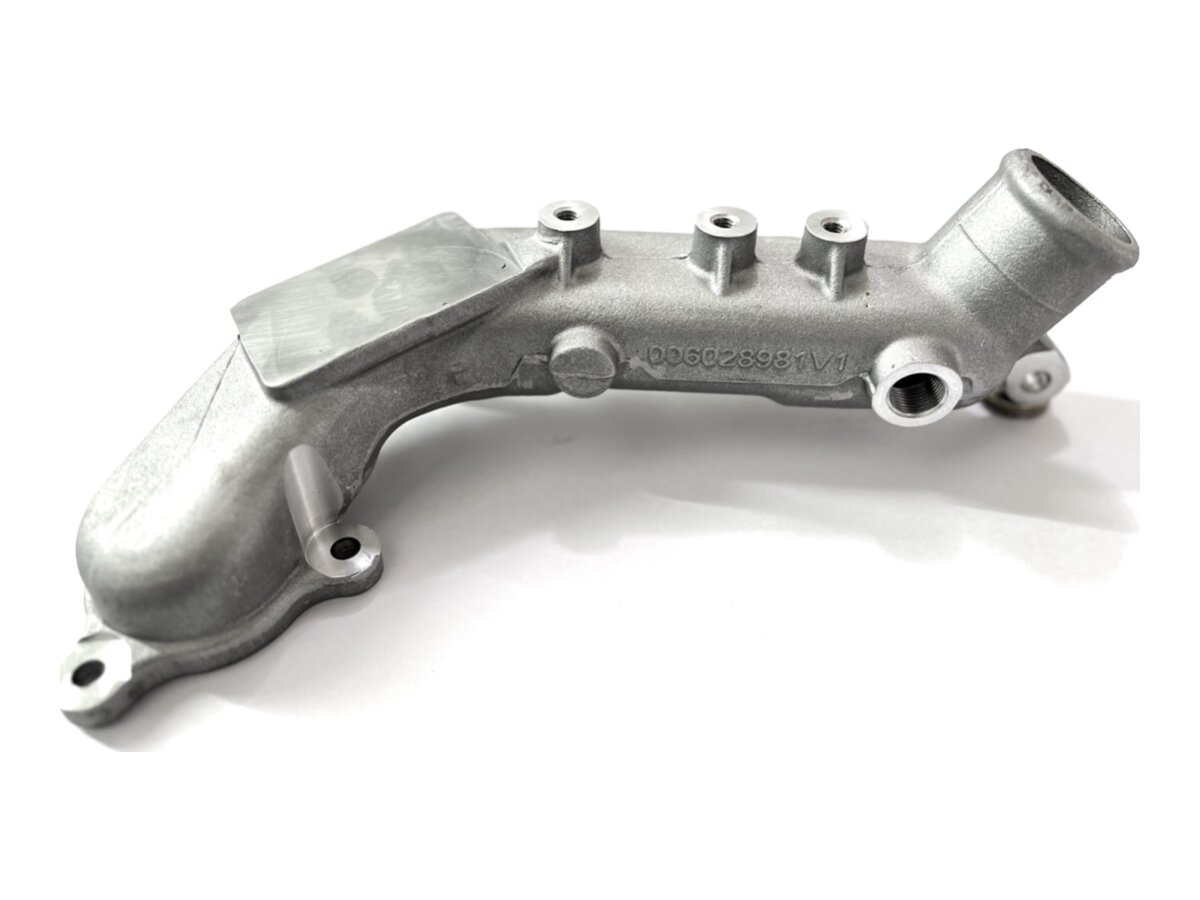
- Valve bodies and manifold (hydraulic) blocks
- Plugs, connectors and threaded inserts
- Cylinder end caps and glands
The features that decide whether it leaks
- Port threads – metric, BSPP, NPT or UNF, cut to class and checked with go/no-go thread gauges.
- Sealing faces and spot faces – flatness, perpendicularity and surface roughness (Ra) to drawing, checked on a roughness tester.
- Bores and cross-drillings – position and size held on VMCs, burr-free intersections so no chips reach the system.
- Cleanliness – deburring and washing before packing.
Bar stock or casting?
Small fittings and adaptors are usually turned complete from bar. Valve bodies and blocks are often machined from customer-supplied castings or forgings. A supplier who can do both simplifies your supply chain.
Hydraulic components from Santosh Engineering Works
We manufacture and machine hydraulic adaptors, fittings, valve bodies, blocks and plugs at Dehu, Pune, on CNC turning centres and VMCs with 4th axis, with ZEISS CMM, roughness and thread-gauge inspection. Explore our hydraulic components or request a quote.








Leave a Reply